

















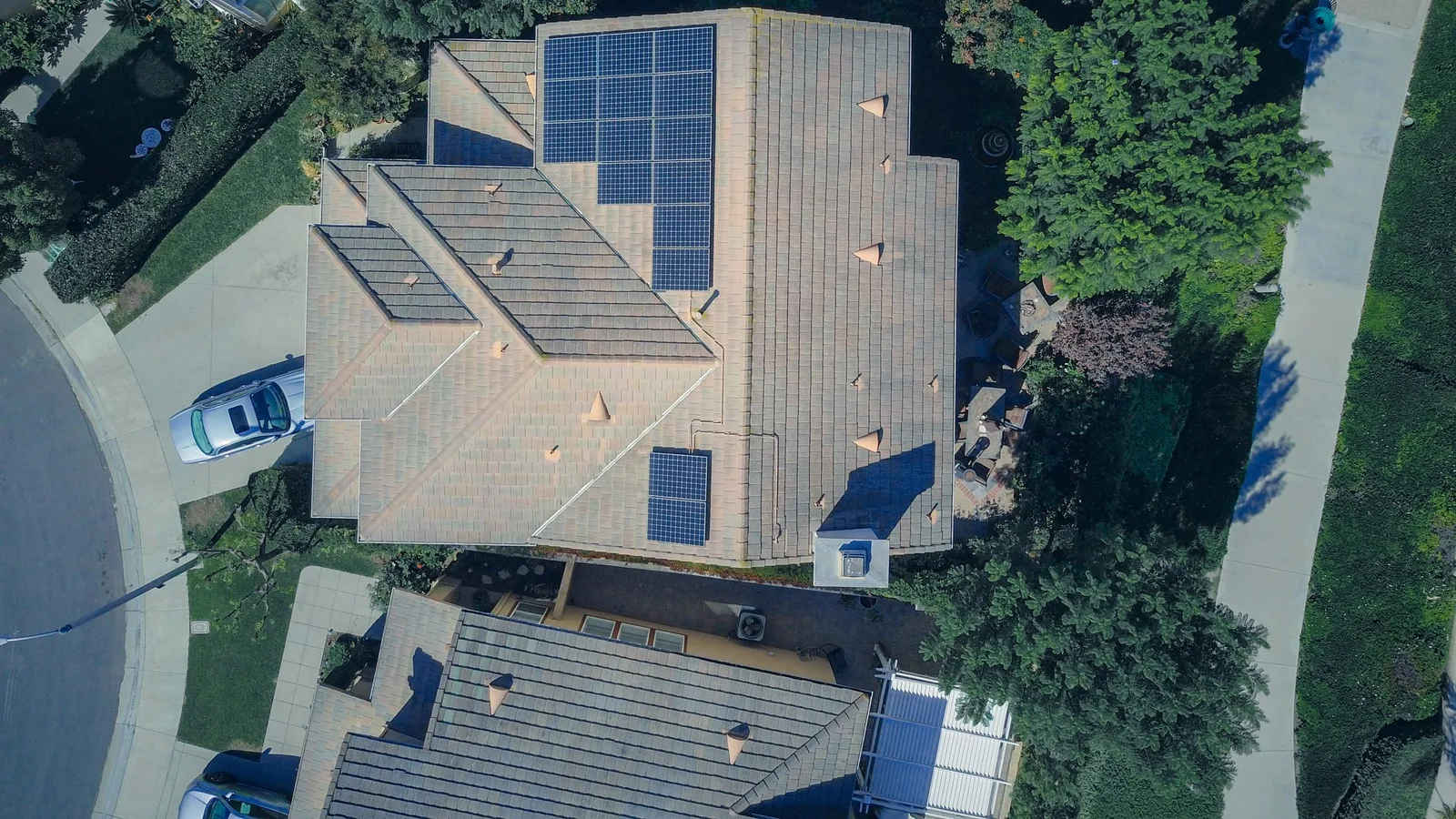
If you have panels on your roof in southern Nevada, your power bill goes up in January. Not because you used more. Because of one 15-minute stretch a day that your solar credits are not allowed to pay for.
On January 1, 2027, NV Energy starts billing southern Nevada residential and small commercial customers a daily demand charge. The utility finds your highest 15 minutes of use in a day, converts it to kilowatts, and charges about 14 cents per kilowatt. Then it resets and does it again tomorrow. An average home peaks around 3.5 kilowatts, so about 49 cents a day.
For most people this is close to a wash. NV Energy is trimming the rest of the bill to make room: the basic service charge drops 50 cents to $18 a month, and the per-kilowatt-hour rate comes down about 1.675 cents. Regulators say a majority of residential customers should see bills stay flat or drop. Commissioner Tammy Cordova described gathering information “that explains how and why many residential customers’ bills will decrease once the daily demand charge is implemented.”
Then there is the roughly one in ten Nevadans with rooftop solar.
Here’s the catch, and it is a two-parter. You buy fewer kilowatt-hours from the grid, so the offsetting rate cut gives you back less than it gives your neighbor. And the credits you earn for exporting power cannot be applied against the demand charge at all: solar customers “would not be able to apply net-metering credits from excess power they send back to the grid toward the demand charge.”
Now add the timing. Your peak 15 minutes almost certainly lands after sunset, when you get home, turn on the air conditioning, start the dryer, and plug in the car. The panels are done for the day. The meter is not.
NV Energy’s own projection: rooftop solar households could see bills rise $12 to $20 a month.
That is $144 to $240 a year, on an asset you financed against a payback model built under the old rules. Nobody re-ran that payback for you.
Is it dumb? No. The grid you draw from at 7 p.m. has to be built for 7 p.m. whether your panels had a great afternoon or not. Call it questionable, and name the real unfairness: not the charge, but that credits you legitimately earned are barred from paying it.
So do this between now and January. You have three months and the fix is free.
Find your peak. NV Energy has been building out customer tools to show exactly this, which regulators gave as the reason for the latest delay. Look for the quarter hour where everything runs at once, then break it up. Dryer at seven, dishwasher at nine, car charging overnight. Pre-cool the house before the evening instead of during it. You are not using less power. You are refusing to use it all in the same 15 minutes, which is a scheduling problem, not a sacrifice.
A home battery flattens the peak properly. It also costs far more than $240 a year. Run that comparison before a salesperson runs it for you, in our solar ROI calculator, with the new charge included.
The fight is not over. Regulators approved this 3-0 in September 2025 and later denied a petition from the Bureau of Consumer Protection to overturn it. The Bureau, under Attorney General Aaron Ford’s office, with Vote Solar and Earthjustice, argued the charge conflicts with a Nevada law on the books since 2013. Those cases were dismissed in late May and are on appeal to the Nevada Supreme Court. The start date has already slipped twice, from April 2026 to October 2026 to January 2027, both times so NV Energy could explain it better.
Plan for January anyway. If you are still shopping for panels in Nevada, this is the newest entry on the list of bill components solar cannot touch, and that list quietly decides your payback.
How Candid Yak makes money. Some of the products we write about pay us if you apply or sign up through our links. That never changes our verdict, our rankings, or the numbers in this article. We call a bad deal a bad deal whether it pays us or not. Some brands shown in our comparison tools are placeholder examples while we finalize partner agreements, and we label them as such.
Sources
- Regulators approve demand charge, net metering changes for NV Energy (Utility Dive)
- What is the daily demand charge and how will it affect NV Energy customers? (The Nevada Independent, May 7, 2026)
- Nevada's new daily demand charge may spare most customers but raise solar bills (The Nevada Independent, July 26, 2026)
- NV Energy demand charge delayed again; now pushed to January 2027 (FOX5 Las Vegas, March 31, 2026)